
Warehouse Security and Freight Crime: Why the Loss Happens After the Lorry Leaves
Distribution operators are judged on the gate, the fence and the camera count. Yet three quarters of load thefts happen nowhere near a secured site. This briefing sets out what the national figures actually show, where warehouse security still has purchase, and what a site can control once the vehicle is on the road.
Warehouse security: key facts at a glance
The short answers on warehouse security and freight crime, for readers and for anyone summarising this page.
- NaVCIS Freight processed 3,424 HGV and cargo crime notifications from UK police forces and industry partners during 2025, an average of 9.4 a day, with reported losses of around £65 million and 265 arrests.
- Around 74% of these thefts are reported to occur at unsecured roadside parking or motorway service areas rather than at secured premises.
- Curtain slashing accounted for 26.9% of incidents, some 915 cases.
- The Road Haulage Association estimates the UK needs roughly 11,000 additional lorry parking spaces; secured facilities typically charge £30 to £50 a night.
- Freight crime has no dedicated police recording code in England and Wales, so it is logged under generic categories such as theft from a vehicle. West Midlands Police has been piloting separate tagging.
- AGS Security provides gatehouse control, manned guarding, mobile patrols, K9 handlers and CCTV monitoring to warehousing and logistics sites across England, Scotland and Wales.
Why warehouse security does not end at the gate
The conventional model treats a distribution centre as a box to be defended. Fence it, light it, camera it, staff the barrier, and the stock inside is safe. On its own terms that model works: secured premises are not where the national loss is occurring.
The difficulty is that the goods do not stay in the box. They leave, on a vehicle, driven by someone who may be agency, subcontracted or unknown to the site, and within an hour they are parked in a lay-by because the driver has run out of hours and there was nowhere else to stop. That is where the load is taken.
This reframes what warehouse security is actually for. Protecting the building is the easy half. The harder and more valuable half is controlling what leaves, verifying who takes it, recording the transaction properly, and understanding that the site's decisions shape the risk the load carries for the next twelve hours.
Operators who grasp this stop measuring warehouse security by camera count and start measuring it by the quality of the gate record.
A site that cannot say, from its own records, which vehicle collected which load, who was driving and what identification was checked, has a warehouse security problem that no amount of perimeter hardware addresses.
Warehouse security and the scale of UK freight crime
The national picture is compiled by NaVCIS Freight, the freight arm of the National Vehicle Crime Intelligence Service, working with police forces and industry partners including the Road Haulage Association.
Crime notifications, 2025
Individual HGV and cargo crime notifications processed by NaVCIS Freight during 2025, from UK police services and industry partners.
Reports every day
The daily average across the year. The true number is higher: industry bodies consistently describe freight crime as under-reported.
Reported losses
The value of goods reported stolen in 2025. Vehicle damage, replacement transport, missed deliveries, insurance and driver welfare sit on top of that figure.
Arrests
Directly related to freight crime during 2025 — against more than three thousand recorded incidents.
A word of caution on the numbers
These figures move sharply year to year and should be read with care. Reported losses were about £68 million in 2023 against 5,370 incidents, and were reported considerably higher for 2024, before the 2025 position above. Some of that movement is real and some of it is reporting behaviour. Anyone building a warehouse security case on a single year's headline is building on sand; the stable findings are the ones that repeat, and those are about location and method rather than totals.
Where load theft happens, and what warehouse security can still control
This is the finding that should shape spending. Around 74% of load thefts are reported to take place at unsecured roadside parking or motorway service areas — not inside secured premises. The single most common method, curtain slashing, accounted for 26.9% of incidents, around 915 cases.
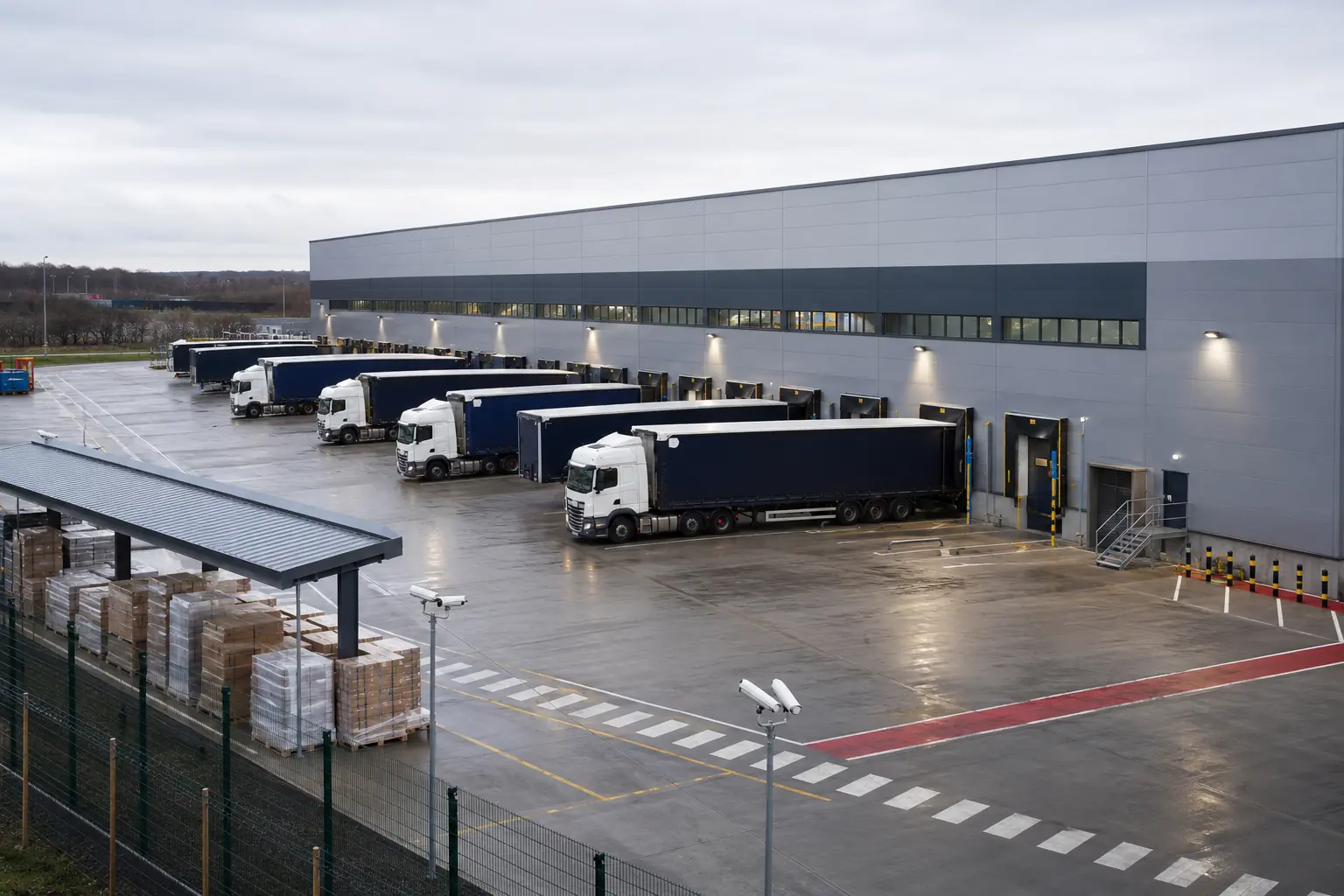
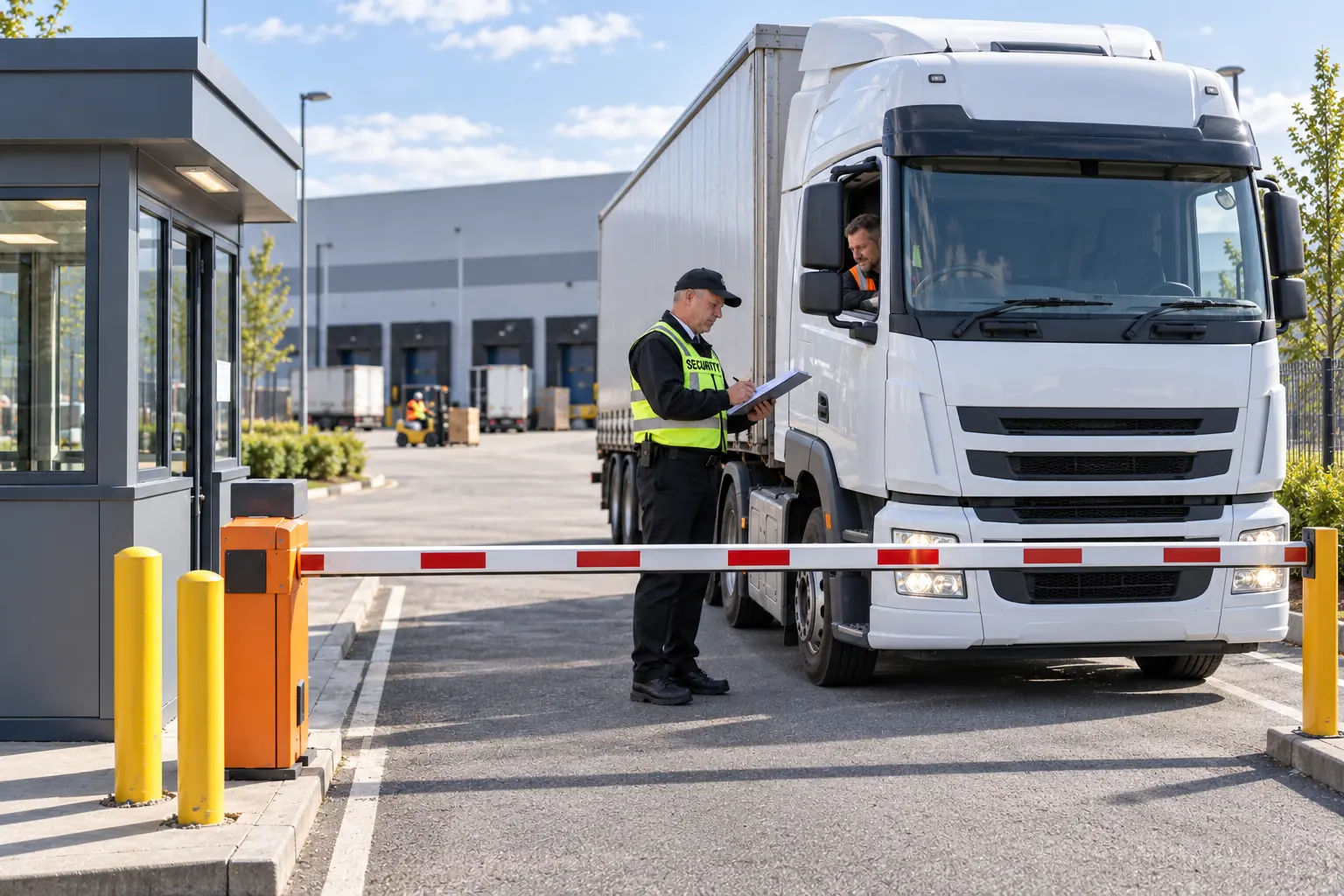
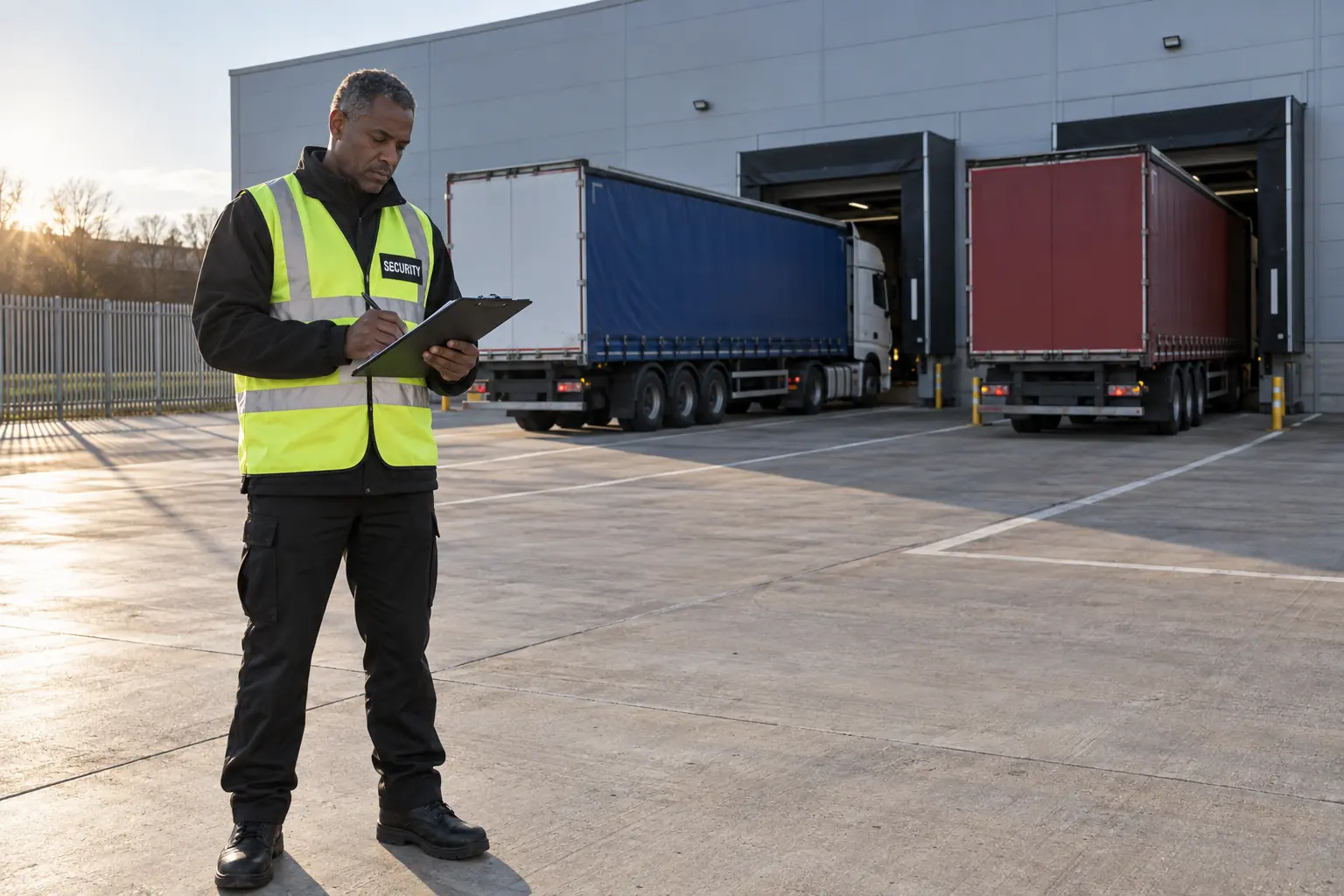
Behind the 74% sits an infrastructure problem rather than a security one. The Road Haulage Association estimates the country is short of roughly 11,000 lorry parking spaces, and secured facilities that do exist charge in the region of £30 to £50 a night. A driver approaching their limit with nowhere affordable to stop parks where they can.
Warehouse security cannot build a lorry park. It can determine whether a load leaves at a time that lets the driver reach secured parking, whether the vehicle and driver were verified before loading, and whether there is a record good enough to support the investigation afterwards. Those three things are inside the site's control and they change outcomes.
The warehouse security blind spot: freight crime has no police code
There is no dedicated Home Office recording code for freight crime in England and Wales. When a load is taken, the offence is logged under a generic heading such as theft from a vehicle, and it sits in the same statistical category as far smaller matters.
The consequence is not merely presentational. Recorded crime data feeds the models that shape police resourcing and force priorities. A category of offence that cannot be counted separately cannot be prioritised separately, and cannot easily be shown to be growing. The Road Haulage Association and NaVCIS have both pressed the point, and West Midlands Police has been piloting separate tagging of freight offences.
For an operator this matters in two practical ways. The first is expectation: a load theft is unlikely to attract the investigative attention its value would command in another category, so prevention and evidence carry more weight than they otherwise would. The second is that your own records may be the best dataset anyone has. A site with disciplined warehouse security logs can demonstrate a pattern — repeat approaches, the same vehicle twice, an interest in a particular bay — that the national statistics will never surface.
Warehouse security law and the duties owed on a distribution site
A distribution centre is a workplace with a constant flow of people who do not work there. That combination drives most of the legal exposure.
What is owed to a visiting driver?
Drivers are lawful visitors, so the common duty of care under the Occupiers' Liability Act 1957 applies, alongside section 3 of the Health and Safety at Work etc. Act 1974, which requires an employer to conduct their undertaking so that people who are not employees are not exposed to risks to their health or safety. Section 37 extends liability to directors and managers.
Does the law say anything specific about yards and traffic routes?
Yes, and it is unusually direct. Regulation 17 of the Workplace (Health, Safety and Welfare) Regulations 1992 requires that “every workplace shall be organised in such a way that pedestrians and vehicles can circulate in a safe manner”, and that traffic routes shall be “suitable for the persons or vehicles using them, sufficient in number, in suitable positions and of sufficient size”. Gate control that manages vehicle movement is doing safety work as well as security work.
Read regulation 17What about CCTV and driver data?
Warehouse security generates personal data: number plates, images, names, signatures and times. That engages UK data protection law, which requires a lawful basis, proportionate retention and transparency to the people recorded. It is worth confirming that a security contractor is itself registered with the Information Commissioner's Office. AGS Security is, under registration ZB329521.
Must warehouse security officers be SIA licensed?
Yes. Under the Private Security Industry Act 2001, officers supplying contract manned guarding must hold a valid SIA licence for the activity performed. On logistics contracts this is routinely audited. Every AGS officer is SIA licensed.
Which warehouse security services suit a distribution operation?
Warehouse security on a live distribution site is mostly about controlling movement rather than repelling attack. These are the arrangements AGS Security deploys across warehousing and logistics and industrial operations.
Gatehouse and HGV access control
The highest-value control on the site. Driver identity checked against the booking, vehicle and trailer recorded, seals verified, times logged. This is where a load theft is prevented or, failing that, where the evidence comes from.
Static guarding on yard and dock
Presence where trailers stand loaded overnight, and at the dock during peak movements, when tailgating and opportunist access are easiest.
Mobile patrols out of hours
For depots that close, and for trailer parks held between shifts. Randomised attendance with GPS-logged visits and a written report each time.
K9 handlers
Effective across large yards and trailer parks where the ground to cover defeats a foot patrol, and on sites that have already been targeted.
Monitored CCTV
Monitoring turns a camera from a record into a response. On a yard the difference is whether someone is watching a trailer being approached, or reviewing it the next morning.
Key holding and alarm response
So a duty manager is not driving in at 2am. Key holding transfers attendance to us, with a written incident report by morning.
Warehouse security records, insurers and proving the chain
When a load goes missing, the argument is rarely about whether it was stolen. It is about where liability sat at the moment it went, and that is decided on documents.
A gate record that shows the vehicle registration, the trailer number, the driver's identity as verified, the seal number applied and the time of departure moves the question decisively. A gate record that shows a name written on a clipboard does not.
The same discipline supports the insurance position. Cargo and premises cover is written on the assumption that stated controls operate, and a claim is tested against what actually happened on the night. Warehouse security that produces contemporaneous, time-stamped, photographed records is producing the evidence that settles claims quickly.
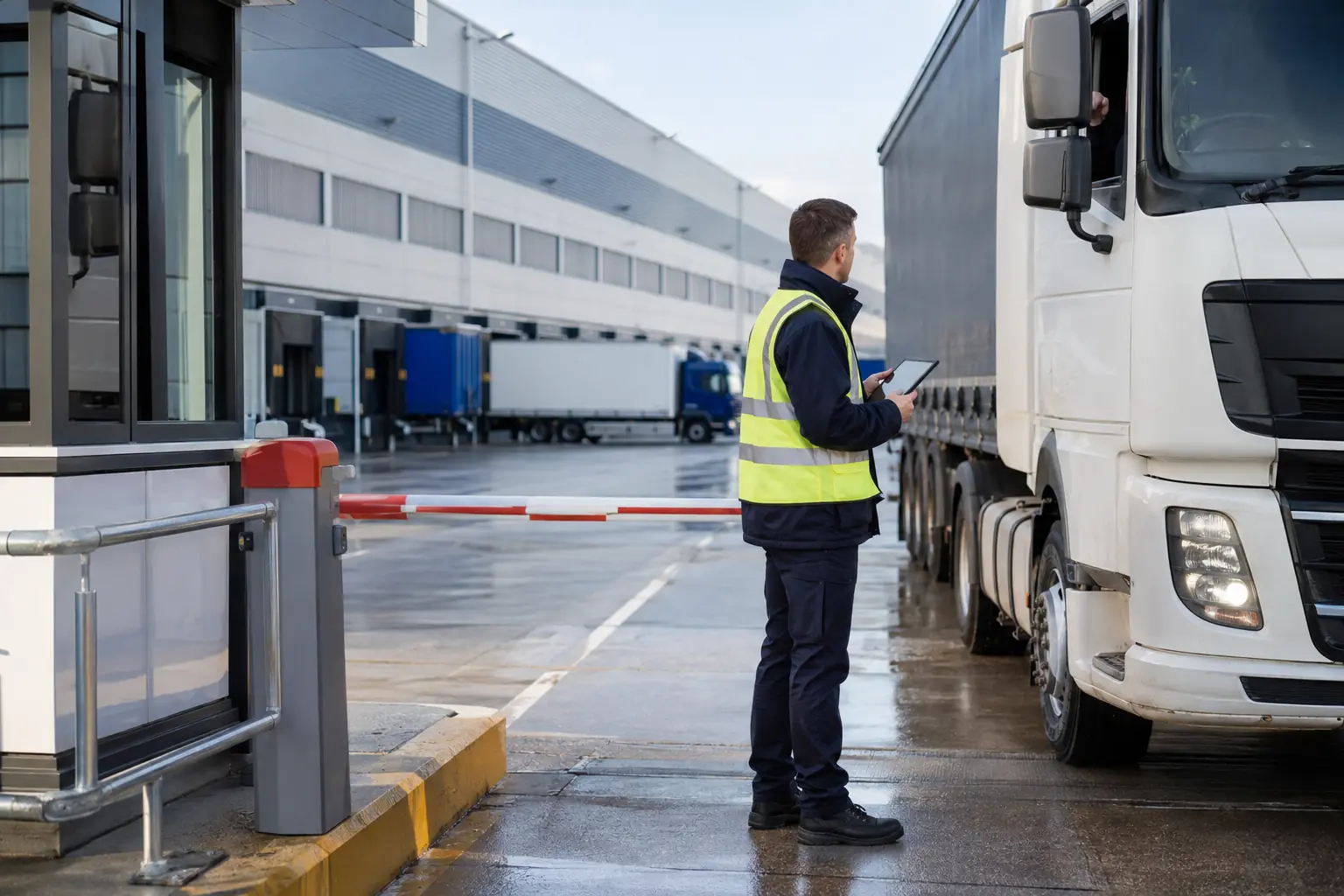
Warehouse security checklist for a distribution centre
Worth working through with the transport desk rather than only with facilities, because half of these are scheduling decisions rather than warehouse security decisions.
- Is driver identity verified against the booking before loading, or only on arrival at the barrier?
- Are vehicle and trailer identifiers recorded, and would you find them again in six weeks?
- Are seals applied, recorded and checked, and is the seal number on the paperwork?
- Do departure times give the driver a realistic chance of reaching secured parking within their hours?
- Do you know where your loads actually stop overnight, or only where they are due next?
- Are loaded trailers left in the yard overnight, and is anyone physically present with them?
- Is CCTV monitored in real time or reviewed after the event?
- Can your security provider evidence a valid SIA licence for every officer who has attended?
- Does the CCTV and gate data have a lawful basis, a retention period and a named owner?
AGS covers distribution and logistics sites nationally, with regional detail for the West Midlands, South Midlands, East Midlands and East of England, and the full list on the locations page.
Warehouse security: frequently asked questions
How much freight crime is there in the UK?
NaVCIS Freight processed 3,424 HGV and cargo crime notifications during 2025, an average of 9.4 a day, with reported losses of around £65 million and 265 related arrests. Industry bodies describe the true figure as higher because of under-reporting.
Where do most lorry load thefts happen?
Around 74% are reported to occur at unsecured roadside parking or motorway service areas rather than at secured premises. Curtain slashing is the most common method, at 26.9% of incidents.
Why does freight crime not have its own police code?
England and Wales have no dedicated Home Office recording code for it, so offences are logged under generic categories such as theft from a vehicle. The RHA and NaVCIS have pressed for change, and West Midlands Police has piloted separate tagging.
What does the law require in a warehouse yard?
Regulation 17 of the Workplace (Health, Safety and Welfare) Regulations 1992 requires a workplace to be organised so pedestrians and vehicles can circulate safely, with traffic routes suitable and sufficient. Section 3 of the Health and Safety at Work etc. Act 1974 covers visiting drivers.
What is the most effective warehouse security control?
On a live distribution site it is usually staffed gate control: verifying driver identity against the booking, recording vehicle, trailer and seal, and logging times. That prevents the loss where possible and produces the evidence where not.
Which areas does AGS Security cover?
AGS Security covers sites across England, Scotland and Wales from its base in Wolverhampton, West Midlands, providing manned guarding, gatehouse security, mobile patrols, K9 dog handlers, CCTV monitoring, key holding and alarm response.
Contact AGS Security for warehouse security
Tell us the shift pattern, the vehicle movements and whether loaded trailers stand overnight, and we will set out what the warehouse security arrangement should be. Assessments are carried out without charge or obligation.
AGS Security, Science Park, Creative Industries Centre, Glaisher Drive, Wolverhampton WV10 9TG
England, Scotland and Wales — check your area
About the publisher. AGS Security is the trading name of Albrighton Group Services Ltd, a security contractor registered in England and Wales, company number 13057321, registered with the Information Commissioner's Office under registration ZB329521.
The company provides manned guarding, gatehouse security, mobile patrols, K9 dog handling, CCTV monitoring, key holding and alarm response to construction, residential development, civil engineering, utilities and energy, industrial, warehousing and commercial property clients across England, Scotland and Wales. Head office: AGS Security, Science Park, Creative Industries Centre, Glaisher Drive, Wolverhampton WV10 9TG. Telephone 0333 577 1777.
Arrange a warehouse security assessment
A short warehouse security visit establishes how vehicles and drivers are actually verified, what the gate record would prove after a loss, and what level of cover is proportionate to the operation. No obligation and no charge.
This article is general information about warehouse security and the duties applying to distribution and logistics operations in Great Britain. It is not legal advice, and it is not advice on the terms of any policy of insurance.
Sources: 2025 freight crime figures are attributed to NaVCIS Freight, the freight arm of the National Vehicle Crime Intelligence Service, as reported in June 2026; the 74% parking figure, the 26.9% curtain slashing share, the estimated shortfall of 11,000 lorry parking spaces and the absence of a dedicated police recording code are as reported in July 2026 citing NaVCIS and Road Haulage Association material; 2023 figures are from NaVCIS and RHA reporting. Freight crime figures vary materially between years and are widely described as under-reported.
Duties under the Health and Safety at Work etc. Act 1974, the Workplace (Health, Safety and Welfare) Regulations 1992, the Occupiers' Liability Act 1957, UK data protection law and the Private Security Industry Act 2001, and the terms of any cargo or premises insurance, should be considered with your own legal, insurance and health and safety advisers.