Secure Off-Site Storage
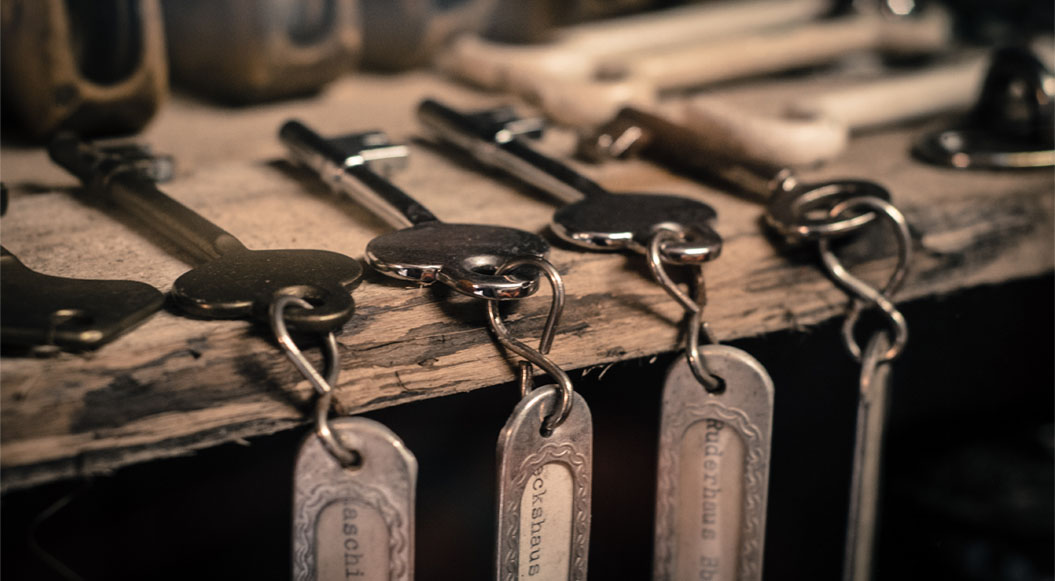
Keys held securely away from your premises, so an intrusion at your site does not compromise the spare set as well.
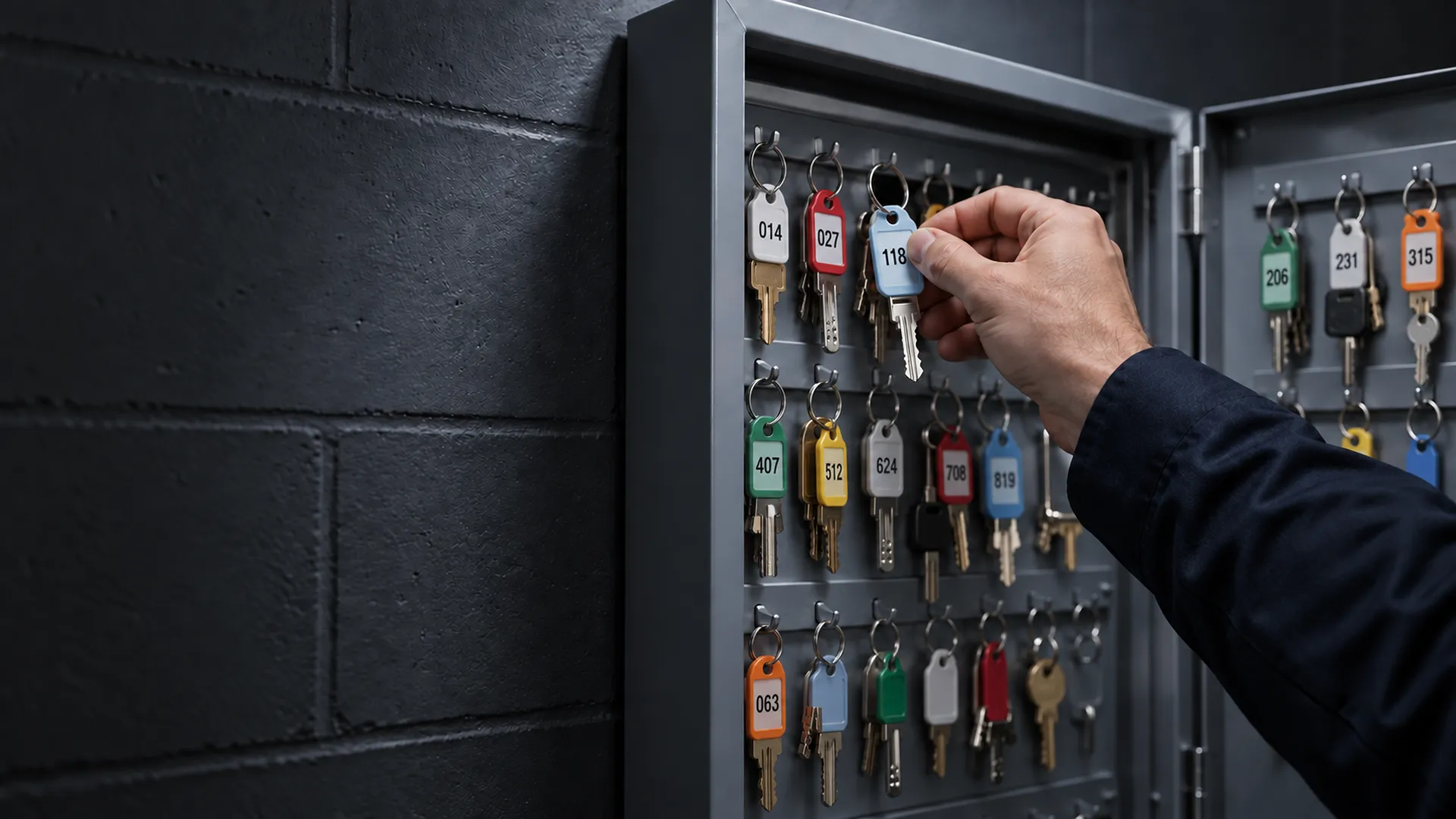
AGS Security holds keys securely off site for commercial, industrial, construction and vacant premises across the UK, and attends when access is needed — so the responsibility stops sitting with one of your managers.
Most organisations arrive at key holding the same way. Keys are with a manager at home, or spread across several staff, and nobody is certain how many sets exist. Then an alarm goes off at two in the morning and one person is expected to drive out alone and walk into a dark building.
Key holding removes both problems at once: custody of the keys, and somebody whose actual job it is to use them. Keys are stored off site, coded rather than addressed, released only to authorised officers, and every call-out produces a written report.
Custody of the keys is half of it. What happens when they are actually needed is the half that matters at two in the morning.
Keys held securely away from your premises, so an intrusion at your site does not compromise the spare set as well.
Identified by reference rather than by your address or business name, so a set separated from our records means nothing.
Keys issued only to authorised officers, against the written instructions agreed for your premises.
Officers attending when an alarm is raised, with the keys needed to get inside and check properly rather than from the car park.
Opening up for engineers, contractors or emergency services outside working hours, on your authority.
An internal and external check for damage or intrusion, with officers remaining until the premises are secure.
Resetting the system where authorised and leaving the building locked and secure before the officer departs.
A written report after every call-out covering the attendance, what was found and the condition the premises were left in.
Key holding is often bought as a filing service — somewhere safe to put a spare set. That is the easy half. The value is in what happens when the keys are needed at an hour nobody wants to be awake.
We hold the keys and we attend, with officers, patrol vehicles and the reporting that follows. A provider who only stores keys still leaves you deciding who drives out.
Off site, coded rather than addressed, and released only to authorised officers against written instructions.
Keys are only useful with someone to use them. Attendance, patrols and response come from the same provider.
The duty-of-care exposure of an employee attending alone at night disappears with the arrangement.
Written reports after each call-out, so access to your premises is documented rather than assumed.
A known number of sets in known hands, instead of an unknown number spread across current and former staff.
Priced on the premises, the sets held and the call-out arrangement agreed, not an off-the-shelf package.
The duty-of-care problem of an employee attending an empty building alone at night goes away entirely.
Sets held in secure storage rather than in a manager's home, car or coat pocket.
Staff move on with keys in a drawer. Held custody means you know what exists and where it is.
Engineers, contractors and emergency services let in on your authority, without a manager making a special journey.
Every attendance recorded, so who entered your premises and when is a question with an answer.
Documented custody and call-out records supporting your insurance and compliance position.
Most organisations are in one of these three positions, and each carries a cost that only becomes visible on the night it matters.
Convenient until they are on holiday, off sick, or asleep at 2am forty minutes away. It also makes one employee personally responsible for attending a possible break-in alone, which is a duty-of-care exposure for the employer rather than a favour to the manager.
Solves availability and creates a different problem: nobody is certain how many sets exist. People change roles and leave, and keys quietly go with them. The honest test is whether you could say today exactly how many sets are in circulation.
A neighbouring business, a former employee, or simply nobody. It works until an alarm activates or a contractor needs access out of hours, at which point the absence of a plan becomes an expensive evening.

Setting this up properly takes an afternoon, and it is the part that determines whether the 2am call goes smoothly.
Keys received, checked against the premises, coded to a reference and placed into secure off-site storage.
Who may authorise a release, who we contact, alarm codes and reset arrangements, and what officers should do on arrival.
Keys held and available around the clock, released only to authorised officers against those instructions.
Attendance when needed, the premises checked and secured, and a written report issued afterwards.
Any premises that stands empty for part of the day eventually needs someone able to get into it who is not a member of staff.
Offices and managed buildings where an activation out of hours otherwise falls to whoever lives nearest.
View Commercial PropertyStores where a manager would otherwise be called back after closing, often for a fault rather than an intrusion.
View Retail SecurityDistribution sites with high-value stock behind one alarm system and shift patterns that leave gaps.
View Warehousing & LogisticsEmpty buildings where nobody is nearby and inspection access is often an insurance condition.
View Unoccupied PropertyExplore selected AGS Security regions below or view the complete regional coverage network.
Our home region, holding keys for commercial and industrial premises across Wolverhampton, Birmingham and Walsall.
Explore West MidlandsMilton Keynes, Bedford, Northampton and Daventry, covering commercial premises and development sites.
Explore South MidlandsNottingham and Derby, supporting out-of-hours access and activation attendance.
Explore East MidlandsPremises across the capital where staff rarely live close enough to attend an activation at night.
Explore LondonKent and the wider South East, covering commercial and operational premises.
Explore South EastLiverpool and the wider North West, holding keys for commercial and industrial sites.
Explore North WestThe schemes and bodies AGS Security is accredited by, registered with or a member of. If your procurement process needs certificates or scheme numbers, ask and we will send them across.






Key holding involves handing a supplier the means to enter your premises. The questions worth asking are how keys are identified, where they are stored, who can release them, and whether the same provider can actually attend when they are needed.
Read feedback from organisations and clients that have worked with AGS Security across commercial, construction and operational environments.
Tell us the premises, how access is handled at the moment and who monitors the alarm, and we can set out a key holding arrangement and a written quotation.