
Retail Security After the Crime and Policing Act 2026: Why Most Store Policies Are Now Out of Date
Two things changed in 2026. Violence against shopworkers fell for the first time in years, bought with five and a half billion pounds of retailers' own money. And the criminal law on shop theft and assault was rewritten. Most store policies still reflect the position before either happened.
Retail security: key facts at a glance
The short answers on retail security, for readers and for anyone summarising this page.
- Section 45 of the Crime and Policing Act 2026 creates a standalone offence: “A person who assaults a retail worker at work commits an offence under this section.”
- Section 46 places a duty on courts to consider a criminal behaviour order on conviction, which can bar an offender from the premises.
- Section 47(1) omits section 22A of the Magistrates' Courts Act 1980, ending the £200 low-value shoplifting rule. Shop theft of any value is again an either-way offence carrying up to seven years.
- The British Retail Consortium recorded 1,600 incidents of violence and abuse a day in 2024-25, down from around 2,000, but still far above the 455 a day seen in 2019-20.
- Retailers spent around £5.5 billion on crime prevention over five years to achieve that. Only 13% rated the police response as good or excellent, up from 9%.
- AGS Security provides SIA licensed retail security officers, mobile patrols, alarm response, key holding and CCTV support across England, Scotland and Wales.
What the 2026 figures show about retail security
The headline from the British Retail Consortium's 2026 crime report was that violence and abuse against shopworkers fell by roughly a fifth, from about 2,000 incidents a day to 1,600. After several years of deterioration that is a genuine turn, and it deserves to be reported as one.
It deserves the second sentence as well. The 2019-20 baseline was 455 incidents a day. At 1,600 the sector is still running at more than three times where it was before the pandemic, and BRC chief executive Helen Dickinson put it plainly: “The drop in violence has been hard won, but the job is far from done as incidents remain almost four times pre-pandemic levels.”
And it was bought. Retailers spent in the region of £5.5 billion on crime prevention across five years to produce that improvement. This is not a story about enforcement catching up. It is a story about an industry funding its own retail security and getting a partial result.
That is the frame this briefing takes. If the improvement is privately purchased, then how a business specifies and deploys retail security is not an administrative detail. It is the variable that determines the outcome.
The physical violence figure barely moved. Around 118 incidents a day involved physical violence and about 36 a day involved a weapon. The fall was concentrated in abuse, not in the incidents most likely to injure someone.
The retail security law that changed in 2026
Assaulting a shopworker was already an offence. What changed is that it is now a named one, with its own consequences attached, and that changes what a store can realistically ask the police and the courts to do.
Section 45: assault of a retail worker
The wording is short: “A person who assaults a retail worker at work commits an offence under this section.” Conviction is summary, carrying imprisonment up to the maximum term for summary offences — six months, rising to 51 weeks once section 281(5) of the Criminal Justice Act 2003 is commenced — or a fine, or both.
Read section 45The definitions are wider than most people assume
A “retail worker at work” is someone working on or about retail premises, either for the owner or occupier or as the owner or occupier themselves — and working includes unpaid work. “Retail premises” means premises used wholly or mainly for retail sale, or mainly for wholesale where retail sales also take place, and the definition expressly includes a stall or a vehicle.
That reach matters for retail security planning. A market trader, a volunteer in a charity shop, a delivery driver working about the premises and the owner of a small independent are all inside the protection. So is the contracted security officer working on those premises.
Section 46: the order that follows conviction
Section 46 places a duty on the court to consider making a criminal behaviour order where a person is convicted under section 45. A CBO can prohibit specified conduct and can bar the offender from named premises. For a store dealing with the same handful of repeat offenders, that is the most practically useful part of the whole Act.
Read section 46A CBO is only available if there is a conviction, and a conviction requires a report, a statement and usually evidence. A retail security operation that de-escalates everything and reports nothing produces no orders and no exclusions.
Retail security and the end of the £200 threshold
For a decade, section 22A of the Magistrates' Courts Act 1980 provided that “low-value shoplifting is triable only summarily”, defining that as theft where “the value of the stolen goods does not exceed £200”. It was never a licence to steal, whatever the reporting suggested, but it shaped how offences were charged and how seriously they were treated.
Section 47(1) of the Crime and Policing Act 2026 omits section 22A entirely. Shop theft of any value returns to being ordinary theft under section 1 of the Theft Act 1968: an either-way offence with a maximum of seven years.
The old threshold
Below it, shop theft was triable only summarily, subject to an adult defendant's right to elect Crown Court trial.
Years maximum now
Shop theft of any value is again an either-way offence under section 1 of the Theft Act 1968.
Detected incidents
Customer theft detected by BRC members in the survey year, with detected losses of nearly £400 million. Undetected theft sits on top.
Delivery theft
Losses from theft of parcels and deliveries reported in the same period — a category that barely existed a decade ago.
What this actually changes for a store
Two things, and neither is automatic. Charging decisions and sentencing options widen, which matters most for prolific offenders whose individual thefts were each small. And the offence classification changes, which has a knock-on effect on detention that section 4 deals with.
What it does not change is the evidential burden. A repeat offender is only prosecuted as one if somebody has been recording the incidents, identifying the person and retaining the footage. The law now rewards good retail security record-keeping in a way it previously did not.
Retail security and the power to detain
This is the part of retail security most often misunderstood, most often got wrong in the moment, and most likely to end in a civil claim. It is worth setting out precisely.
There is no special power for security officers
An SIA licensed officer has exactly the same power as any other member of the public: the any-person power of arrest in section 24A of the Police and Criminal Evidence Act 1984. The licence is a requirement to work in the role. It confers no additional authority to detain.
Read section 24AThe conditions are cumulative, and all of them must be met
Section 24A allows a person other than a constable to arrest anyone who is in the act of committing an indictable offence, or whom they have reasonable grounds to suspect of committing one, and — where an indictable offence has been committed — anyone guilty of it or reasonably suspected of being guilty.
But subsection (3) restricts that power to circumstances where the person arresting has reasonable grounds to believe arrest is necessary for one of the reasons in subsection (4), and where “it appears to the person making the arrest that it is not reasonably practicable for a constable to make it instead”. The four reasons are to prevent the person causing physical injury to themselves or another, suffering physical injury, causing loss of or damage to property, or making off before a constable can take responsibility for them.
Why the threshold repeal matters here
Section 24A applies to indictable offences, a category that includes either-way offences. While section 22A made low-value shop theft triable only summarily, the availability of the any-person power for those thefts was at best doubtful. With section 22A omitted, shop theft of any value is an either-way offence again, and the section 24A position is restored on its ordinary terms. Store policies written around the old classification are now describing a legal landscape that no longer exists.
None of this makes detention advisable. An arrest that fails any limb of section 24A is a false imprisonment, and any force used becomes an assault. The commercially sensible retail security policy is almost always to observe, record, identify and report — and to reserve detention for the narrow cases where the statutory conditions are plainly met.
Who gets assaulted, and why it is a retail security design problem
The single most useful operational finding of the year came from Usdaw rather than from any security supplier. General Secretary Joanne Thomas summarised it: “Two-thirds of attacks on retail staff are triggered by theft or armed robbery.”
Read that as a design statement rather than a statistic. Most violence against shopworkers is not random. It happens at the moment a member of staff intervenes in a theft, which means the store's approach to theft is also, whether anyone has written it down or not, its approach to staff safety.
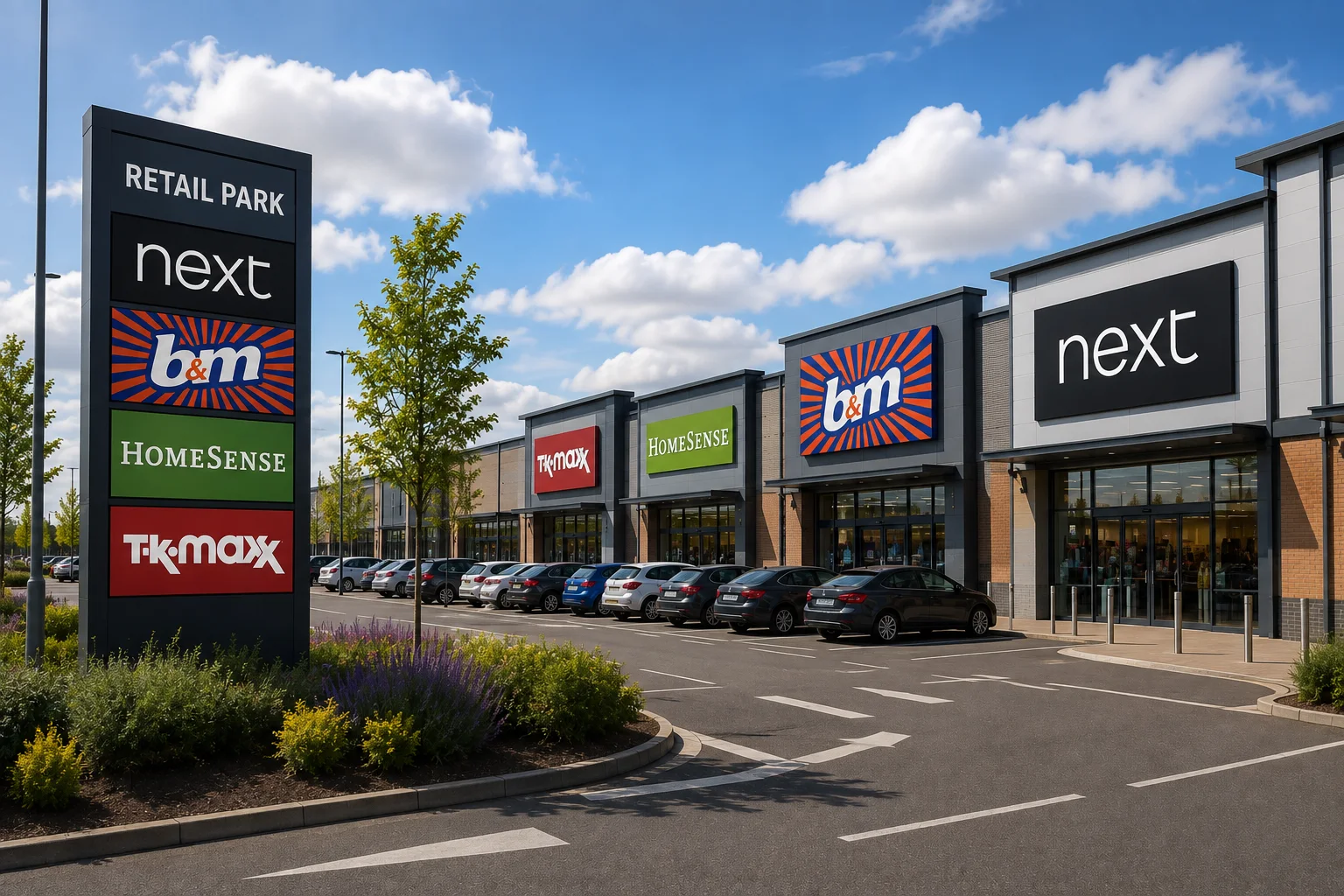


The design questions that follow
If two-thirds of assaults are triggered by intervention, then the questions worth asking are about who intervenes, when, and with what backing. Is a lone shop assistant expected to challenge, or a trained officer? Is the instruction to staff written down, and does it match what managers actually expect on a Friday night? Does the officer on duty have a colleague, a radio, or neither?
A retail security specification that puts a licensed officer at the point of intervention is doing two jobs at once: reducing loss, and moving the risk of assault away from a shop assistant who did not sign up for it. The health and safety duty under section 2 of the Health and Safety at Work etc. Act 1974 sits with the employer either way.
Around 36 incidents a day involve a weapon. Any retail security instruction that tells staff to challenge or pursue needs to have been written with that number in front of the person writing it.
What police response means for retail security planning
The BRC figure that should shape planning is not the crime count. It is that 13% of retailers rated the police response as good or excellent. That is an improvement — the year before it was 9% — and it is still a number that has to be designed around rather than complained about.
Nothing in this section is a criticism of officers. Forces are allocating finite resources across competing demand, and retail theft competes with everything else. The practical consequence for a retailer is the same either way: for most incidents, the response that arrives is the one you have arranged and paid for.
What that means in a specification
It means the retail security plan has to be self-sufficient for the first period of any incident, and it has to generate the material that makes a later prosecution possible. Concretely, three things.
A named, licensed person present at the point of risk. Not a camera and not a policy document. The evidence on CCTV monitoring is that recording alone does not reduce crime; presence and response do.
A report for every incident, not just the serious ones. Repeat offending is only visible if the small events are recorded. A criminal behaviour order under section 46 depends on a conviction, and a conviction usually depends on a pattern somebody documented.
Identification that survives review. Time-stamped footage, a description, the goods and value, and a statement taken while it is fresh. This is the difference between an incident that becomes a charge and one that becomes a line in a log.
The new offences widen what the courts can do. They do not create evidence. A store that reports nothing gets nothing from the Crime and Policing Act 2026, however well drafted it is.
Retail security services that match the risk
Retail runs two distinct risk periods — trading hours, when the risk is to people, and closed hours, when the risk is to stock and fabric. They need different arrangements. These are the services AGS Security deploys across retail and commercial property.
Retail security officers
SIA licensed officers on the shop floor and at the door during trading hours, taking the point of intervention away from shop staff and producing the incident record.
Static manned guarding
Continuous cover for high-value stock, flagship stores, distribution points and any site with a live repeat-offender problem.
Mobile patrols
Randomised out-of-hours attendance across a retail park or a group of stores, with a timed, dated, photographed report after every visit.
Alarm response
A licensed officer attends the activation, establishes the cause, secures the premises and reports — so no member of store staff attends alone at night.
Key holding
Keys held securely off site, controlled contractor access, and a compliant keyholder for the alarm receiving centre's records.
CCTV specification and monitoring
Camera positioning that actually produces identification evidence, with monitoring arranged through an accredited centre and retention configured to your policy.
Also applied across hospitality and leisure and unoccupied property where a unit falls vacant between tenants.
Choosing a retail security arrangement
Three questions, and the answers usually point somewhere specific.
Who is currently intervening? If the answer is shop staff, the store is carrying the assault risk in the place the data says it concentrates. Moving intervention to a licensed officer is the single highest-value change most stores can make.
Is the problem prolific or opportunist? A handful of repeat offenders is an evidence and exclusion problem, answered by recording, identification and pursuing criminal behaviour orders. Broad opportunist loss is a presence and layout problem.
What happens after close? Trading-hours cover and out-of-hours cover are different purchases. A store with a stockroom problem at 3am does not need more retail security officers at 3pm.

A retail security checklist for store and area managers
Twelve questions worth working through, several of which are policy rather than procurement.
- Does your written instruction to staff still reflect the £200 threshold or the pre-2026 position on assault?
- Who is expected to intervene in a theft, and is that expectation written down and matched by what managers ask for in practice?
- Are staff told not to pursue offenders out of the store, and is that instruction actually followed?
- Is every incident reported, including the small ones, or only the ones that escalate?
- Could you evidence a pattern of repeat offending by one individual over the last six months?
- Does your CCTV produce identification-quality images at the entrance and at the till, or only wide shots?
- Has anyone asked the police or the CPS about criminal behaviour orders for your prolific offenders?
- Are staff who have been assaulted told the offence is now a named one under section 45, and supported to give a statement?
- Do your retail security officers understand that section 24A gives them no more power than any member of the public?
- Is there a written policy on detention, and does it set out all the section 24A conditions?
- Who attends if the alarm activates at 3am, and does a member of store staff ever attend alone?
- Can your provider evidence a valid SIA licence for every officer who has worked in your store?
AGS covers retail sites nationally, with regional detail for the West Midlands, East Midlands, London and the North West, and the full list on the locations page.
Retail security: frequently asked questions
Is assaulting a shop worker now a separate offence?
Yes. Section 45 of the Crime and Policing Act 2026 provides that a person who assaults a retail worker at work commits an offence, carrying up to six months' imprisonment on summary conviction, or a fine, or both. The maximum rises to 51 weeks once section 281(5) of the Criminal Justice Act 2003 is commenced.
Has the £200 shoplifting limit been abolished?
Yes. Section 47(1) of the Crime and Policing Act 2026 omits section 22A of the Magistrates' Courts Act 1980, which had made low-value shoplifting triable only summarily. Shop theft of any value is again an either-way offence under the Theft Act 1968, with a maximum of seven years.
Can a retail security officer detain a shoplifter?
Only on the same basis as any member of the public, under section 24A of the Police and Criminal Evidence Act 1984. The offence must be indictable, the officer must reasonably believe arrest is necessary for one of the four statutory reasons, and it must not be reasonably practicable for a constable to make the arrest instead. An SIA licence confers no extra power.
How much violence do shopworkers face?
The British Retail Consortium recorded around 1,600 incidents of violence and abuse a day in 2024-25, down from roughly 2,000 the previous year but still well above the 455 a day recorded in 2019-20. About 118 a day involved physical violence and about 36 a day involved a weapon.
Does a criminal behaviour order ban someone from a shop?
It can. Section 46 requires a court to consider making one on conviction under section 45, and a criminal behaviour order can prohibit specified conduct and bar an offender from named premises. It depends on a conviction, which depends on the incident being reported and evidenced.
Which areas does AGS Security cover?
AGS Security provides retail security officers, manned guarding, mobile patrols, alarm response, key holding and CCTV support across England, Scotland and Wales from its base in Wolverhampton, West Midlands.
Contact AGS Security about retail security
Tell us the store, the hours that worry you and who is currently expected to intervene, and we will set out what proportionate retail security looks like. Site assessments are carried out without charge or obligation.
AGS Security, Science Park, Creative Industries Centre, Glaisher Drive, Wolverhampton WV10 9TG
England, Scotland and Wales — check your area
About the publisher. AGS Security is the trading name of Albrighton Group Services Ltd, a security contractor registered in England and Wales, company number 13057321, registered with the Information Commissioner's Office under registration ZB329521.
The company provides retail security, manned guarding, gatehouse security, mobile patrols, K9 dog handling, CCTV specification and monitoring, key holding, fire watch and alarm response to retail, construction, residential development, industrial, warehousing and commercial property clients across England, Scotland and Wales.
Head office: AGS Security, Science Park, Creative Industries Centre, Glaisher Drive, Wolverhampton WV10 9TG. Telephone 0333 577 1777.
Arrange a retail security assessment
A short visit establishes where loss is occurring, who is currently carrying the risk of intervention, and what cover is proportionate during trading hours and after close. No obligation and no charge.
This article is general information about retail security and the law applying to retail premises in Great Britain. It is not legal advice, and decisions about detaining any person should be taken on advice and on the facts. Sources: the Crime and Policing Act 2026, sections 45, 46 and 47(1), and section 22A of the Magistrates' Courts Act 1980 as omitted by it, and section 24A of the Police and Criminal Evidence Act 1984, all as published on legislation.gov.uk; the Home Office retail crime factsheet for the Crime and Policing Act 2026; the British Retail Consortium 2026 crime report for the figures on violence and abuse, physical violence, weapons, customer theft, delivery theft, crime prevention spend and police response ratings, and for the quoted remarks of BRC chief executive Helen Dickinson; the quoted remark of Usdaw general secretary Joanne Thomas as reported in coverage of that report. Duties under the Health and Safety at Work etc. Act 1974 and the Private Security Industry Act 2001, and your own policies on intervention and detention, should be considered with your own legal and health and safety advisers.